Coordinates: 50.3957°N, 5.8165°EElevation: c. 255 mSector: Northern ShoulderKey dates: 18–22 December 1944Allied units: 504th PIR (82nd Airborne), 703rd TD BnGerman units: Flak-Abt. 84, SS-Pz.Gren.Rgt. 2 (KG Peiper)
Cheneux is a small hamlet on a plateau above the Amblève River, two and a half kilometres southwest of La Gleize. In December 1944 it held the only bridge over the Amblève still strong enough for tanks, making it the critical link in Kampfgruppe Peiper’s supply line and, when that line was cut at Stavelot, his last potential escape route for armour.Bergström, The Ardennes 1944–1945, 2014, p. 182; Pallud, Ardennes 1944: Peiper & Skorzeny, 1987, p. 138; LoFaro, The Sword of St. Michael, 2011, p. 446. All three identify the Cheneux bridge as the only Amblève crossing capable of bearing armour.
The battle for Cheneux, 20–21 December, was one of the most brutal small-unit actions of the Ardennes campaign. The 504th Parachute Infantry Regiment attacked across open, wire-strewn fields into devastating 20mm flak fire, fighting through the night with grenades and jump knives in hand-to-hand combat against SS panzergrenadiers and Luftwaffe flak crews.LoFaro, The Sword of St. Michael, 2011, p. 446; Nordyke, More Than Courage, 2008; Megellas, All the Way to Berlin, 2007. Barbed-wire fences strung every 20–50 yards across the western approaches turned the fields into a kill zone. The regiment suffered 225 casualties; Companies B and C of the 1st Battalion were virtually destroyed.LoFaro gives 225 casualties including 23 killed. Beevor (Ardennes 1944, 2015, p. 211) gives 232 casualties. Both agree on 23 killed; the 7-man difference may reflect different counting methods.
The capture of Cheneux sealed Kampfgruppe Peiper’s encirclement at La Gleize. Without the bridge, neither fuel nor reinforcements could reach Peiper.Agte, Jochen Peiper, 1999; Cole, The Ardennes, 1965, p. 370. The Germans left behind 14 flak guns, 5 howitzers, 2 anti-tank guns, 6 halftracks, and 4 trucks; all out of fuel. Three days later, he abandoned all his armour and walked out with 800 survivors on Christmas Eve.
Cheneux & environs — key positions, 18–22 December 1944
Cheneux, commune of Stoumont, Liège province, Belgium. The Amblève bridge lies to the northeast; La Gleize is 2.5 km northeast; Rahier (504th PIR CP) 1.5 km southwest.
Stoumont at top, Cheneux bottom-right. The open fields where the 504th PIR attacked are clearly visible on the plateau above the Amblève. Click markers for positions. North arrow visible top-right of original exposure.
Tactical situation — 504th PIR assault on Cheneux, 20–21 December 1944
Green arrows: 504th PIR attack routes (1st Bn from south-west, 3rd Bn flanking via Monceau from south-east). Red dashed lines: German fields of fire from flak positions. Amber polygon: KG Peiper defensive perimeter. Click unit boxes for detail.
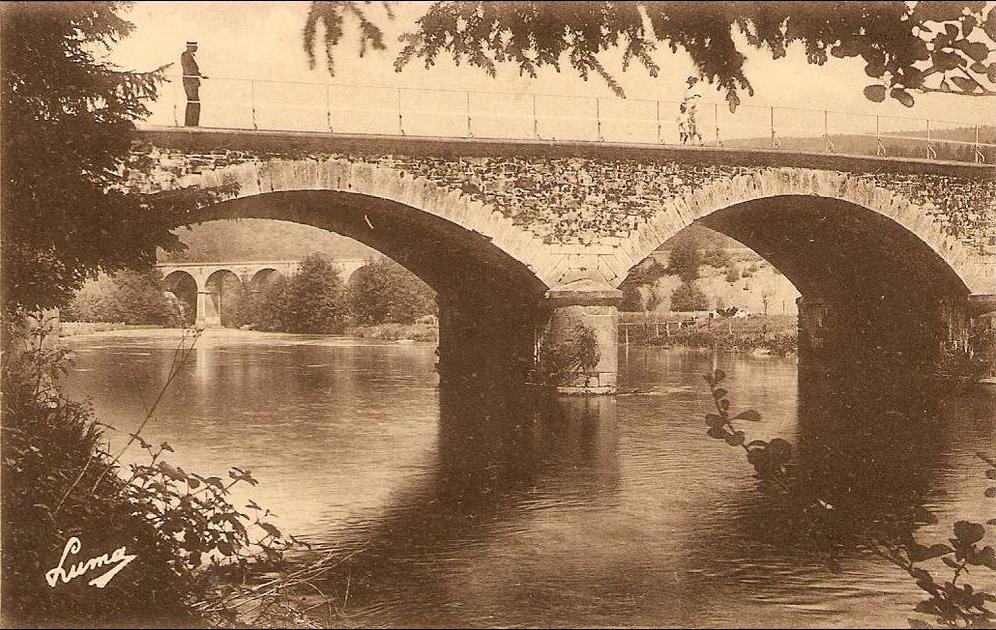
Pre-war postcardThe Amblève bridge at CheneuxThe stone bridge over the Amblève at Cheneux, photographed before the war. This was the only bridge in the area strong enough for tanks, making it the critical link in Kampfgruppe Peiper’s supply line and his last potential escape route for armour.Postcard by Luma. Private collection.
Wartime photographPanther No. 131 abandoned at CheneuxA Panther Ausf. G of Kampfgruppe Peiper abandoned on the road descending to Cheneux. Houses and the Amblève valley are visible in the background. The tank was likely abandoned during the withdrawal from La Gleize, 24 December 1944.Via Panzer DB.
Wartime photographPanther No. 131 — front viewFront view of the same Panther, showing the mantlet and hull glacis. The tank sits in a ditch beside the road, turret traversed. The bare winter orchard on the hill above is characteristic of the Amblève valley landscape.Via Panzer DB.
Modern photographCheneux village road — present dayThe road descending into Cheneux from the plateau, near the spot where German positions covered the approaches. The 504th PIR attacked across the open fields above and to the left of this road on 20 December 1944.Google Street View.
18 December 1944
KG Peiper Spitze1. Pz.Kp., SS-Ustuf. Hennecke
18 Dec
c. 13:00
Peiper’s column arrivesLead element under SS-Untersturmführer Hennecke crosses the intact Amblève bridge at Cheneux. Hennecke’s Panther fires on five civilians near the bridge, killing two and wounding two. The column pushes west toward Stoumont and the Meuse. (Bergström 2014, p. 182; Pallud 1987, p. 139; Agte 1999)
[DISCREPANCY: Civilian identities. Bergström: “Mrs. Alphonse Gillet” + 1 unnamed. Castor (La route des massacres, 2005, p. 127): “Maria Hulot and Léa Goffinet.”]
386th Fighter Sqn365th Fighter Group, USAAF
18 Dec
13:30–16:00
P-47 Thunderbolt air attackMultiple waves of P-47s strafe the German column for two to three hours. Panther No. 131 destroyed, several halftracks and a dozen vehicles knocked out. The air attack buys critical time. (Cole, The Ardennes, 1965, p. 109; Pallud 1987, p. 138; Agte 1999)
A bomb scores a direct hit on the Dumont house (the first house on the Cheneux road). The owners, Jules Dumont and Maria Goffinet, sheltering in the cellar, are killed in the ruins. (Castor, La route des massacres, 2005, p. 132)
[DISCREPANCY: Agte gives the air attack as 14:40–16:10 (twelve Thunderbolts); Bovy gives 14:30–15:30; Cole and Pallud give c. 13:30–16:00. Agte claims a Wirbelwind shot down one Thunderbolt.]
KG PeiperFlak-Abt. 84, III./SS-Pz.Gren.Rgt. 2
18 Dec
16:30
Garrison establishedAfter the Neufmoulin bridge is destroyed further west, Peiper recognises his battlegroup is becoming trapped. He orders the main body to withdraw to La Gleize but leaves a strong detachment at Cheneux to hold the bridge: Flak-Sturm-Abteilung 84, elements of III./SS-Panzergrenadier-Regiment 2, and supporting weapons. The bridge is now the lifeline. (Pallud 1987, p. 140; Giles 1970, p. 88)
[DISCREPANCY: Garrison commander. Nordyke names Major Wolfgang von Sacken (Flak-Abt. 84, Luftwaffe). Castor (2005, p. 192) names “Major Wolf.” Possibly the same person (“Wolf” truncating “Wolfgang von Sacken”), or two different officers: one SS, one Luftwaffe. The identity matters because it determines whether the defence was organised by KG Peiper’s SS chain of command or the Luftwaffe flak element.]
19 December 1944
SS-Hstuf. Leopold7. Kp., from La Gleize
11. (gep.) Kp.SS-Oscha. Rudi Rayer
19 Dec
evening
German garrison reinforcedPeiper orders Leopold’s 7th Company from La Gleize to take position west of Cheneux. 11. Kompanie under SS-Oberscharführer Rayer, remnants from Stoumont Station, also arrives, “in a foul mood,” vandalising houses and assaulting villagers. The garrison now includes 20mm flak wagons, MG-42s, a Puma armoured car, and halftracks mounting 105mm howitzers. Barbed-wire fences are strung every 20–50 yards across the western approaches. (Pallud 1987, p. 140; Castor 2005, p. 192)
Émile Dupont orders civilians to evacuate to the school, then the church. Jean Prince hides in the attic rather than comply. During the night of 19–20 December, American patrols are sent towards Cheneux but detect nothing; the paratroopers have no knowledge of the terrain or of the German forces present. (Castor 2005, p. 192)
20 December: Daylight Assault
82nd Airborne HQMaj. Gen. Gavin
504th PIRCol. Reuben H. Tucker
20 Dec
07:00
Gavin orders the attackShortly after daylight, Gavin visits Tucker at the Rahier command post. Civilians report approximately 125 vehicles, including about 30 tanks, moving through Rahier the previous afternoon towards Cheneux. Gavin orders Tucker: “To move into the town of Cheneux without delay and, conditions permitting, to seize the bridge.” 1st Battalion (Major Willard Harrison) receives the mission; Companies B (Captain Helgeson) and C (Captain Milloy) will lead. (Gavin, On to Berlin, 1979, pp. 222–223; LoFaro 2011, p. 446; Booth and Duncan 1994, p. 256; Blair 2002, p. 371)
1st Bn, 504th PIRMaj. Harrison; Co. B & C
20 Dec
14:00
Daylight attack across the fields1st Battalion attacks across 400–500 metres of open pasture laced with perpendicular barbed-wire fences. Devastating crossfire from 20mm flak guns and MG-42s pins Company B down 500 yards from the village. PFC Snow, Private Kelly, and Private Holliday advance a captured halftrack mounting a 77mm gun, engaging German positions. Kelly is hit by 20mm fire; Snow takes over as gunner. (Nordyke, More Than Courage, 2008; 82nd Airborne Division, “After Action Report,” 1945)
[DISCREPANCY: H-hour. The 82nd Airborne AAR (primary source) gives 14:00; Nordyke corroborates. Castor (2005, p. 192) places the 1st Battalion’s departure from Rahier at 13:00. The one-hour difference likely represents the approach march; but it affects whether the 504th attacked with one or two hours of daylight remaining.]
[DISCREPANCY: Initial casualties. Nordyke: six men “wounded” by 20mm crossfire at first contact. LoFaro (2011, p. 446): six men “killed.” Different sources, possibly different phases of the same engagement.]
Company B, 504thCapt. Helgeson
20 Dec
17:00
First withdrawalUnable to advance under withering fire, Captain Helgeson orders a withdrawal: every man for himself, back to the woods two hundred yards to the rear. Company B has suffered more than sixty casualties. Harrison contacts Tucker, who orders a night attack. (Nordyke 2008; LoFaro 2011, p. 446; Castor 2005, p. 193)
[DISCREPANCY: German losses in daylight. Castor (2005, p. 193): “At this point in the day, the Germans have still suffered no casualties.” Nordyke describes the captured halftrack engaging positions with 77mm shells “inflicting casualties and forcing their withdrawal.” The discrepancy shapes whether the German defence was an impregnable hedgehog untouched by the daylight assault (Castor) or a strong position that took some losses (Nordyke).]
Night assault beginsAt 19:30, after the planned ten-minute artillery barrage has failed to materialise, both companies move out of the woods. Companies B and C attack abreast across the same wire-strewn fields in darkness. Grazing fire from 20mm flaks and machine guns tears into the advancing paratroopers. Men caught on the wire fences are shot down. (Nordyke 2008; Castor 2005, p. 193)
[DISCREPANCY: Fire support. Both Nordyke and Castor agree the artillery barrage probably did not happen. Castor adds that the two M36 tank destroyers “arrived after the attack,” meaning the 504th attacked a fortified village at night across open ground without either the planned artillery preparation or armoured support. The absence of fire support is integral to understanding the severity of casualties.]
“It sounded like a hundred machine guns going off at once. I could see German tracers going over my head, only inches away.” (Holmstock, via Nordyke 2008)
S/Sgt “Knobby” WalshCompany B, 504th PIR
20 Dec
c. 20:30
“Come on, let’s get ’em men!”S/Sgt William P. “Knobby” Walsh stands up in the kill zone and yells. His entire platoon follows, shouting. The infantry breaks through the initial German positions. A private from Company C slips onto a 20mm flak gun and kills the gunner with a knife from behind. Hand-to-hand fighting with grenades and jump knives erupts across the village edge. (Nordyke 2008; LoFaro 2011, p. 447)
“Staff Sergeant Walsh stood right up and said, ‘Come on, let’s get ’em men!’ He started to run towards the town, and the entire platoon followed him, shouting all the way.” (Nordyke, More Than Courage, 2008)
Company C, 504thCapt. Milloy
Flak-Abt. 84Maj. von Sacken
20 Dec
c. 22:00
Main line overrun; savage hand-to-handCompany C overruns the German main line of resistance. Approximately twenty SS grenadiers are killed in hand-to-hand combat. Lieutenant Kemble (MG platoon) carries a machine gun forward fifty yards to lay covering fire; he is mortally wounded. Lieutenant Yepsen is also killed. Co. C: ~70 casualties(Nordyke 2008; LoFaro 2011, p. 447; Megellas 2007)
PFC Raymond Levy charges a flak wagon, firing from the hip. He is hit by a machine-gun burst; his body catches fire from a white phosphorus grenade on his belt. “This one kid, Levy, ran up behind the gun while we were off to the right and started firing at the first flak-wagon. The machine gun turned around and got him with a burst.” (Nordyke 2008)
703rd TD Bn2× M36 Jacksons
20 Dec
23:00
Puma knocked out; Tucker on the radioHarrison orders the M36s forward: “If these men don’t get into the battle, shoot them!” Two rounds knock out the German Puma armoured car. The light MG platoon is committed; 20mm fire “methodically killed” the crews of five of eight guns. (Nordyke 2008)
Tucker on the radio to division: “Opposition at Cheneux fini except one flak wagon.” Forty-five minutes later: five flak wagons still firing. (Nordyke 2008)
1st Bn, 504th~90 men holding
21 Dec
01:50
“HAVE TOWN (CHENEUX)”Tucker radios: “HAVE TOWN (CHENEUX).” But the 1st Battalion has only tenuous control with approximately ninety men. Stretchers are brought forward for the wounded. (Nordyke 2008; LoFaro 2011, p. 447)
Mme Cornélie Boutet, hiding in a henhouse, is deafened by machine-gun fire. Civilians shelter in the church as four farms blaze through the stained-glass windows. (Castor 2005)
21 December: House to House
SS-Pz.Gren.Rgt. 2PzKpfw IVs, Morschheck road
21 Dec
06:30
German counterattack at dawnAt 06:30, two panzergrenadier battalions with eight PzKpfw IVs attack along the Morschheck road after a thirty-minute artillery barrage. They penetrate Company E’s positions and eight tanks enter the manor grounds. SS-Hauptsturmführer Leopold is killed; SS unit commander Schnelle wounded. The 1st Battalion repulses the attack. PFC Raymond S. Holsti (G Company) concentrates machine-gun fire on the German vehicles until a bazooka team knocks out the flak wagon. DSC(Nordyke 2008; Cole, The Ardennes, 1965, p. 369; Megellas 2007)
3rd Bn, 504th PIRMaj. Julian Cook
Lt Jim MegellasH Company, 3rd Bn
21 Dec
morning
Cook’s flanking attack via MonceauTucker and Lieutenant Colonel Cook lead the 3rd Battalion on a wide flanking march east of Cheneux through Monceau. Rough terrain and German outposts slow the advance. Lieutenant Megellas observes eight Germans digging in near the bridge; fires on order, all eight fall. A 20mm flak wagon opens fire; the group sprints seventy-five yards under fire. Private Donald Herndon is hit in the leg; Megellas carries him to safety. Silver Star(LoFaro 2011; Gavin 1979, pp. 224–225; Booth and Duncan 1994, p. 256; Megellas 2007)
1st & 3rd Bn, 504thConverging attack
21 Dec
c. 17:00
Cheneux secured3rd Battalion attacks from the north whilst 1st Battalion pushes from the west. House-to-house fighting with grenades and knives as ammunition runs low. By 17:00, Cheneux is firmly in American control. The bridge is secured. German defenders withdraw towards La Gleize, leaving behind fourteen flak guns, five 10.5 cm guns, two 7.5 cm anti-tank guns, six halftracks, and four trucks. (Nordyke 2008; Megellas 2007, p. 243; Cole, The Ardennes, 1965, p. 370; Agte 1999)
KG PeiperChâteau Froid-Cour conference
21 Dec
midday
Peiper concedesAt Château Froid-Cour, Peiper assembles Poetschke, Diefenthal, and von Westernhagen. Conclusion: holding Stoumont and Cheneux is senseless; fuel and ammunition are exhausted. He orders a pullback to La Gleize. The encirclement is complete. (Agte 1999)
22 December: Aftermath
2nd Bn, 504th PIRMaj. Wellems
22 Dec
Relief in place2nd Battalion relieves the shattered 1st and 3rd Battalions. Captain Campana (S-3, 2nd Battalion) surveys the aftermath: the main road and fields are strewn with German dead and equipment; disabled self-propelled guns and tanks are visible. Company B, 1st Battalion has been reduced to eighteen men with no officers. Company C: thirty-eight men and three officers. (LoFaro 2011; Nordyke 2008)
[DISCREPANCY: Total casualties. LoFaro gives 225 casualties including 23 killed for the 1st and 3rd Battalions combined. Beevor (Ardennes 1944, 2015, p. 211) gives 232 casualties including 23 killed.]
.jpeg)
.jpeg)
.jpg)